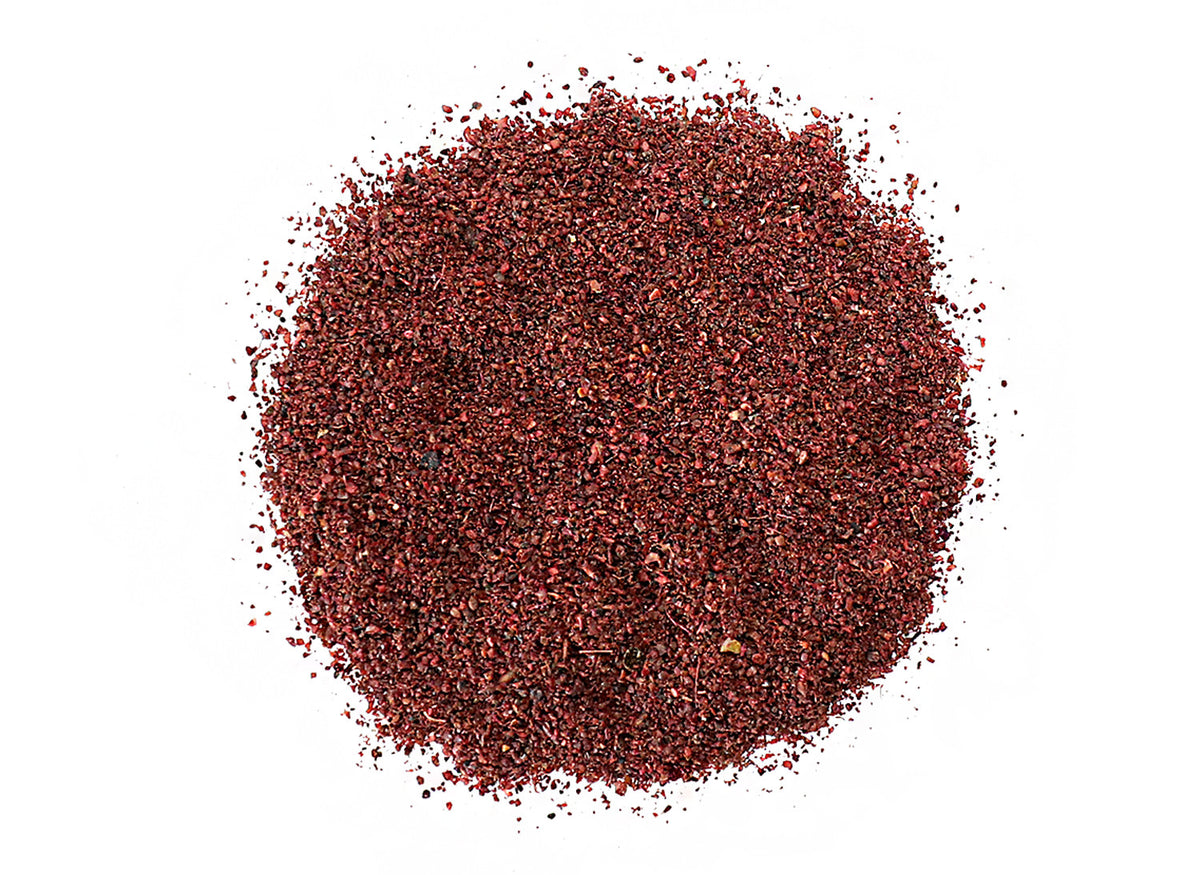
Sumac Berry
Sumac Berry
Sumac Berry (Rhus coriaria)
With its brilliant red berry clusters standing upright like torches, sumac has been prized for thousands of years as both a flavorful spice and a traditional botanical. Native to southern Europe and western Asia, Rhus coriaria is a small deciduous shrub in the cashew family (Anacardiaceae). Although related to poison sumac, edible sumac is completely safe to consume and is easily distinguished by its upright clusters of red berries, while poison sumac bears drooping white fruits in swampy habitats.
Harvested in late summer and ground into a vibrant reddish-purple powder, sumac is celebrated for its bright, tart, lemon-like flavor. Long before lemons became widely available, it was used throughout the Mediterranean and Middle East to add acidity to foods. Today, it remains a signature ingredient in za'atar, marinades, vinaigrettes, hummus, rice dishes, grilled vegetables, and kebabs. It can also be infused into teas, syrups, and tinctures.
Beyond the kitchen, sumac has a rich history in traditional herbalism and was also used as a natural dye and source of tannins for leather making. In North America, berry infusions known as "sumac-ade" or "pink lemonade" were traditionally enjoyed as a refreshing summer beverage. Considered energetically cooling, sumac continues to be appreciated for both its culinary versatility and longstanding wellness traditions.
Ingredients: Organic sumac berry powder and salt.
Couldn't load pickup availability